

The Neuroverse: Spatial Intelligence for an AI-Native Planet
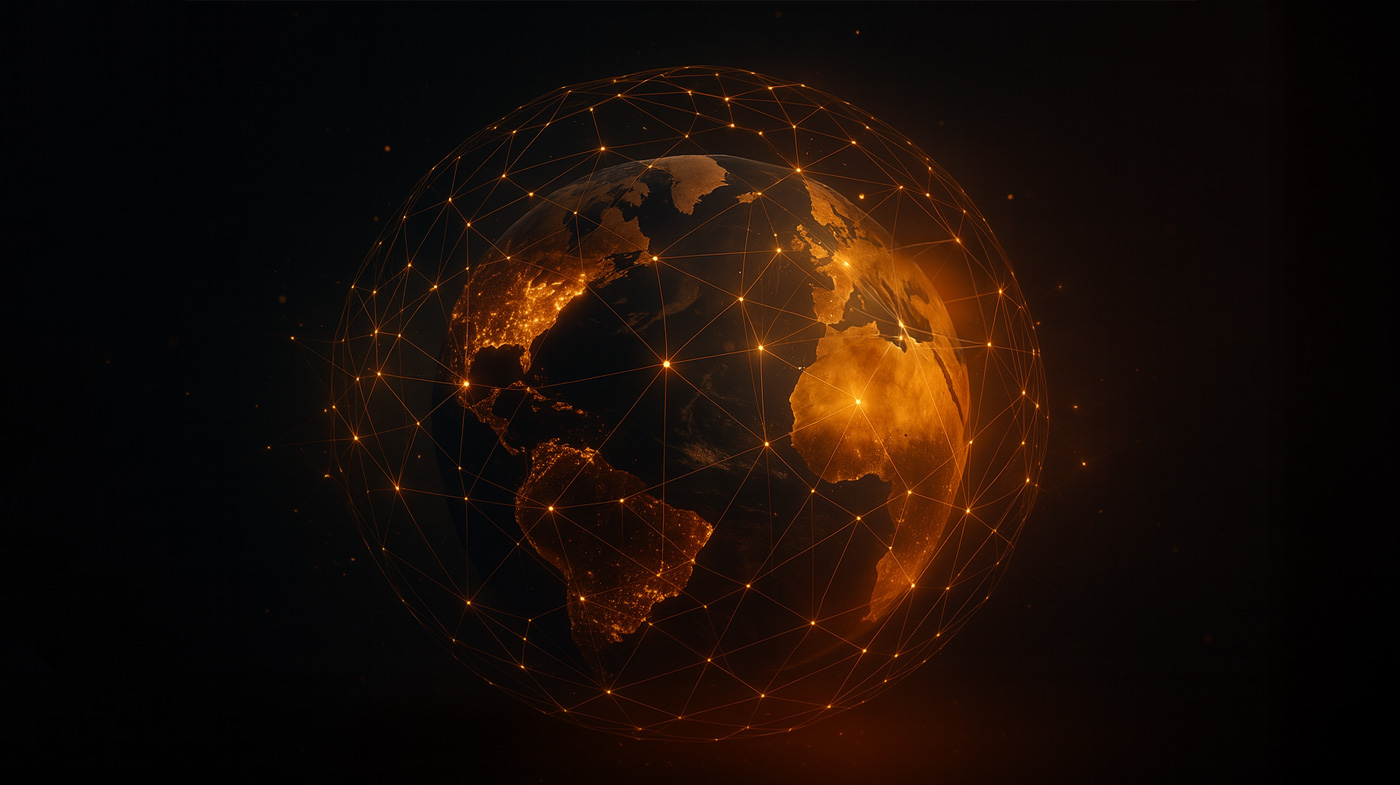
From maps to meaning: how decentralized sensor intelligence is redefining how AI agents interact with the real world.
Spatial Is Everything
In the emerging era of intelligent systems, one truth is becoming clear: spatial context is the foundation of planetary intelligence. Whether it’s an autonomous drone navigating a forest fire, a climate DAO coordinating tree planting, or a logistics bot rerouting to avoid flooding, intelligent action depends on knowing what’s happening, where, and when.
Unfortunately, today’s systems are largely flying blind. GPS tells us location. Maps show static infrastructure. But they don’t explain what’s changing now, what’s causing it, or what actions should be taken.
That’s where the Neuroverse comes in.
The Neuroverse Emerges
The Neuroverse is a decentralized spatial intelligence layer — a planetary nervous system that connects sensors, edge AI, and distributed trust. It enables real-time, machine-readable understanding of the physical world.
Its architecture is built on three pillars:
- Neurostream — a mesh of sensor nodes capturing environmental, infrastructure, and context-specific data.
- Neuronets — AI-enabled edge processors that transform raw signals into structured knowledge.
- Prime Oracle — a decentralized coordination layer that enables agents to act on shared, verified truths.
Together, these layers transform raw spatial data into intelligent, actionable insight.
From Maps to Meaning
Traditional geospatial systems like Google Maps, GIS, even remote sensing platforms offer excellent navigation. But they lack interpretation. They show us where things are, but not what’s happening, why, or what to do next.
The Neuroverse flips this paradigm.
A temperature spike in a hillside microclimate? The Neuroverse doesn’t just log it, it triggers localized alerts, prompts agents to reroute, and predicts downstream effects on water usage or agricultural yield.
By transforming location data into contextual intelligence, the Neuroverse enables AI systems to operate in complex, dynamic environments with confidence and trust.
Why AI Needs Spatial Grounding
As we build more autonomous agents like drones, digital twins, smart contracts, even decentralized science DAOs — we face a critical bottleneck: lack of grounded, verifiable, real-time spatial context.
For these systems to coordinate, adapt, and optimize outcomes, they need:
- Trusted data about the real world
- Geospatial provenance and immutability
- Context-aware decision support at the edge
The Neuroverse solves this by combining smart sensors, edge inference, and Hedera’s high-integrity distributed ledger. AI agents no longer rely on assumptions. They reason from facts on the ground.
Composability, Ownership, and Incentives
Beyond intelligence, the Neuroverse introduces an economic layer for crowd sourcing spatial data.
Using Geo-Territory Medallions, contributors can claim a territory, verify data, and earn rewards for powering the Neurostream. Communities, startups, and DAOs can publish and consume spatial intelligence as composable digital primitives turning data into digital public goods.
Every stream, every signal, every insight can be verified, monetized, and recombined. This creates a regenerative ecosystem where local intelligence feeds global coordination.
The Use Cases Are Already Here
- In Penang, we are piloting microclimate sensing networks to support urban resilience and agroforestry.
- Smart devices can be used to detect infrastructure failures in real time from floods to power outages.
- Climate actors can tokenize zones of regeneration, where impact is verified through live sensor intelligence.
This isn’t the future. It’s already happening device by device, stream by stream.
In Conclusion: The Spatial Substrate For AI
As AI systems scale, they will need a real-time understanding of the physical world for them to act meaningfully on our behalf.
The Neuroverse delivers this.
It’s not just a sensor network. It’s not just an oracle. It’s the spatial substrate for an intelligent, decentralized planet.
The future of spatial context isn’t static. It’s dynamic, decentralized, and alive.
Welcome to the Neuroverse.
